Study 01 · Heat Safety
Cooling sized to the thermal load each body carries — for heat-exposed workers, tactical and defense personnel, athletes and the adaptive, and those whose own thermoregulation runs unreliable.
Customize your build
Segment, activity, environment, and PPE level — in, an indicative cooling demand and a tiered recommendation out, from off-the-shelf to a full custom build.
The Science of Cool
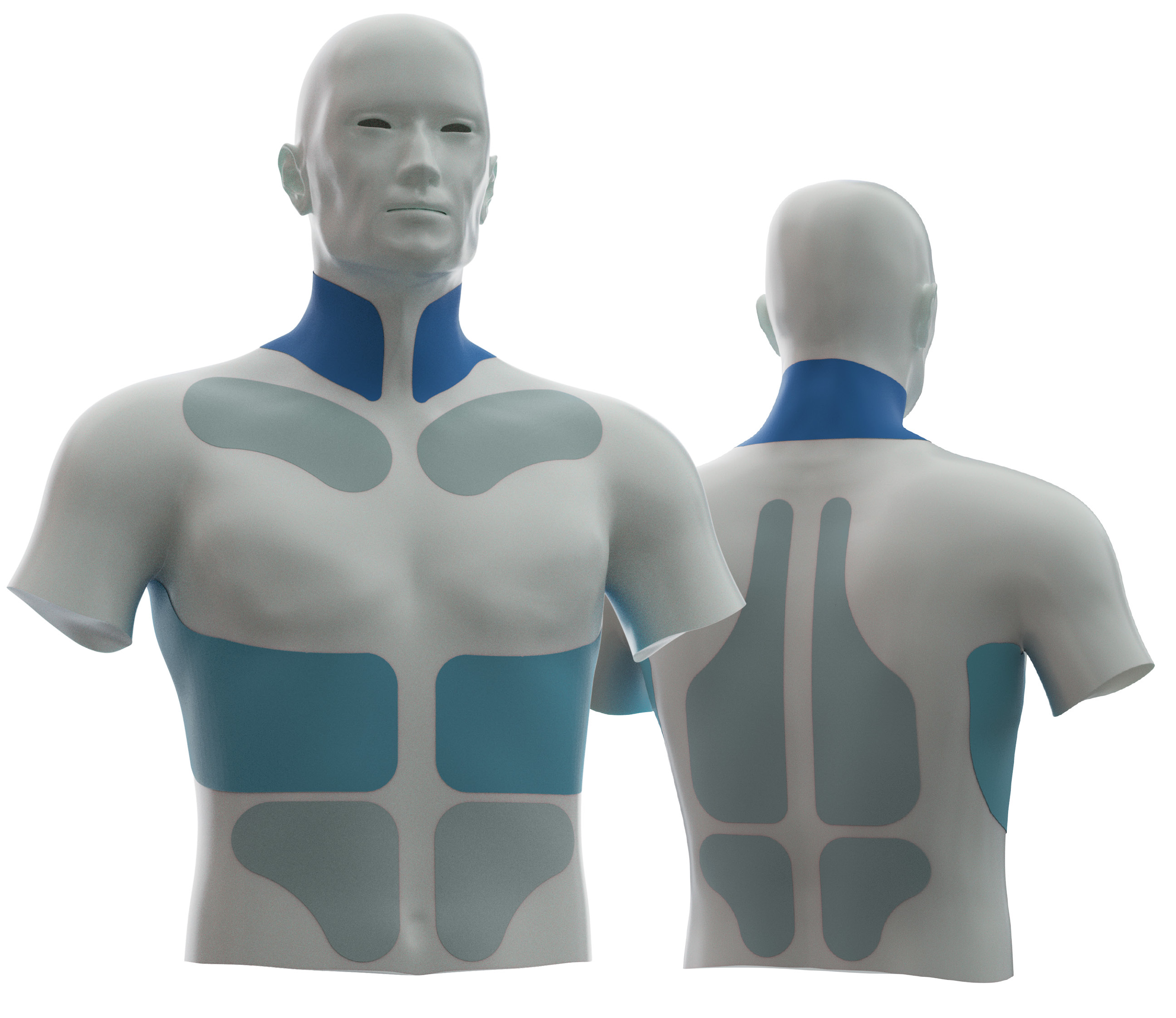
Perceived cooling, vascular cooling, and progressive zone targeting — three tiers of thermal coverage designed to regulate core temperature and dissipate heat stress, mapped to the body and driven by the platform. Each tier activates a new vascular region — peri-thoracic, axillary, cervical — escalating thermal coverage without adding bulk or complexity.

Peri-thoracic, upper chest & lower abdomen.
Addition of the axillary zone.
Addition of the cervical zone.
Learn
Workers in heat — welding, foundry, forklift, warehouse.
Government / defense; body armor and field gear. Separated from Occupational for its distinct buyer and compliance path.
Adaptive golf, Paralympic, recreational sport.
MS, dysautonomia, spinal cord injury; daily-life heat vulnerability.
A cross-cutting filter
Protective equipment runs from Level D (minimal / surgical / light splash) to Level A (full hazmat encapsulation). It appears across Occupational, Tactical, and Medical, so it is an input to the calculator, not a segment. Encapsulation is often the single biggest driver of cooling need.
What we measure
Engage — the Cooling Calculator
What goes in
Segment, activity (metabolic load), and PPE level (A–D).
The occupational view breaks the need into five variables — the work, the place, the gear, duration and mobility, and the form factor: cooling embedded in worn gear, whether vest, neck, limb brace, boot, or PPE liner.
What comes out
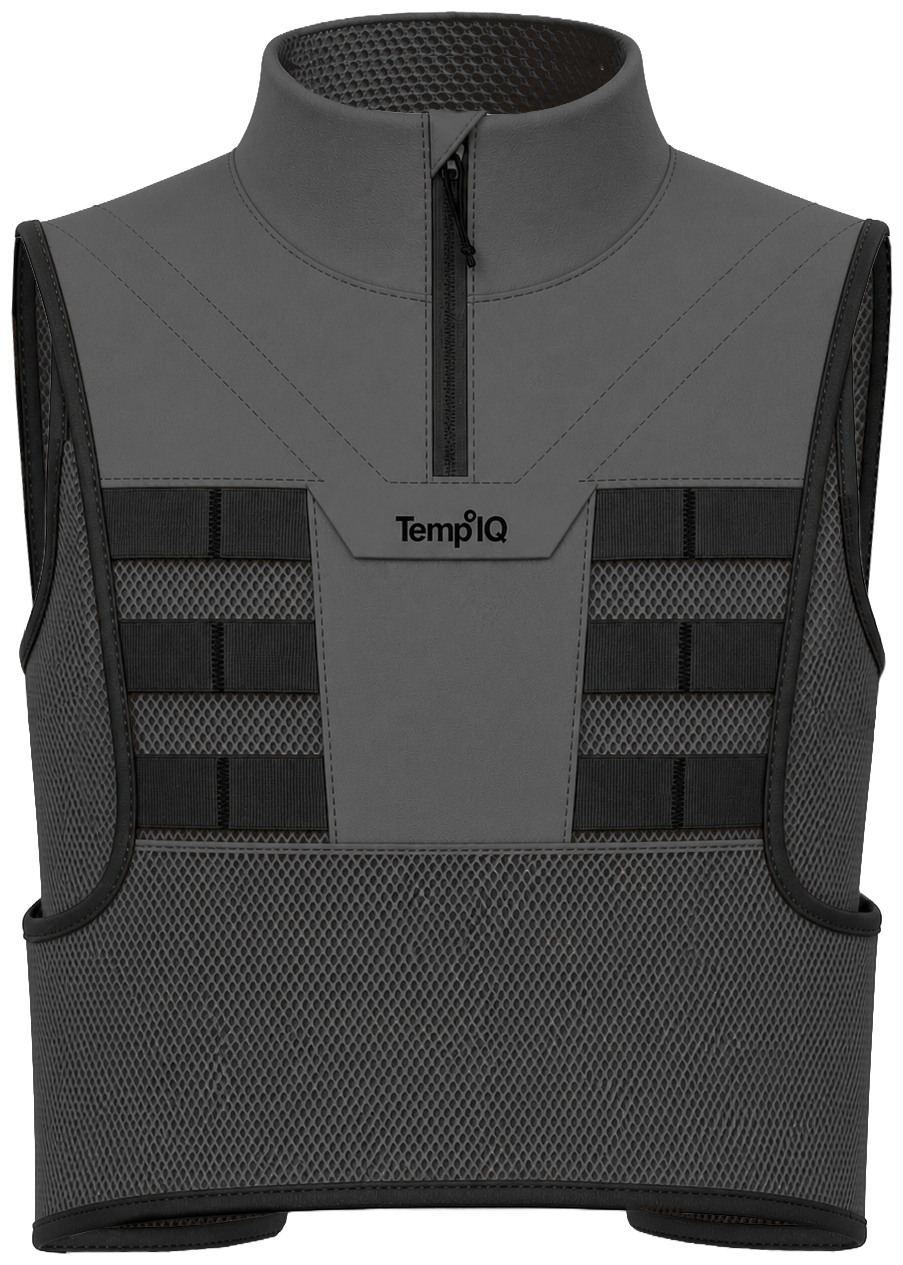
An off-the-shelf recommendation — the Palomino V1.
A portable custom solution, sized to the role.
Or a full custom build — “tell us your heat problem,” routed straight to the team.
Advance
Calorimeter validation plus occupational data → new form factors and better cooling embedded in the gear people already wear. Today the demand tiers are indicative; once live heat-removed data flows, each scenario gets a measured watt target.
Heat Safety white paper
Does measured cooling reduce heat burden and protect function for people whose thermoregulation is unreliable — and improve safety and performance for heat-exposed workers and adaptive athletes? Observational and within-subject; consumer device (non-FDA).
Draft outline · not yet publishedThe measurement and study claims on this page — heat removed and cooling efficiency, the steadiness signal, perceived temperature vs. tolerance, and HRV — are drawn from the Heat Safety white paper, which is in preparation. Until it is published in the library, these claims are attributed to that forthcoming paper rather than to an in-library reference, and demand tiers are indicative, not measured.
Consumer cooling framing is non-FDA. Descriptive, not diagnostic.