Study 03 · Cranial Cooling

One platform, two pillars.

A single cranial platform — the HALO unit — directed to two ends, concussion and sleep. Device-agnostic and clinician-governed throughout.
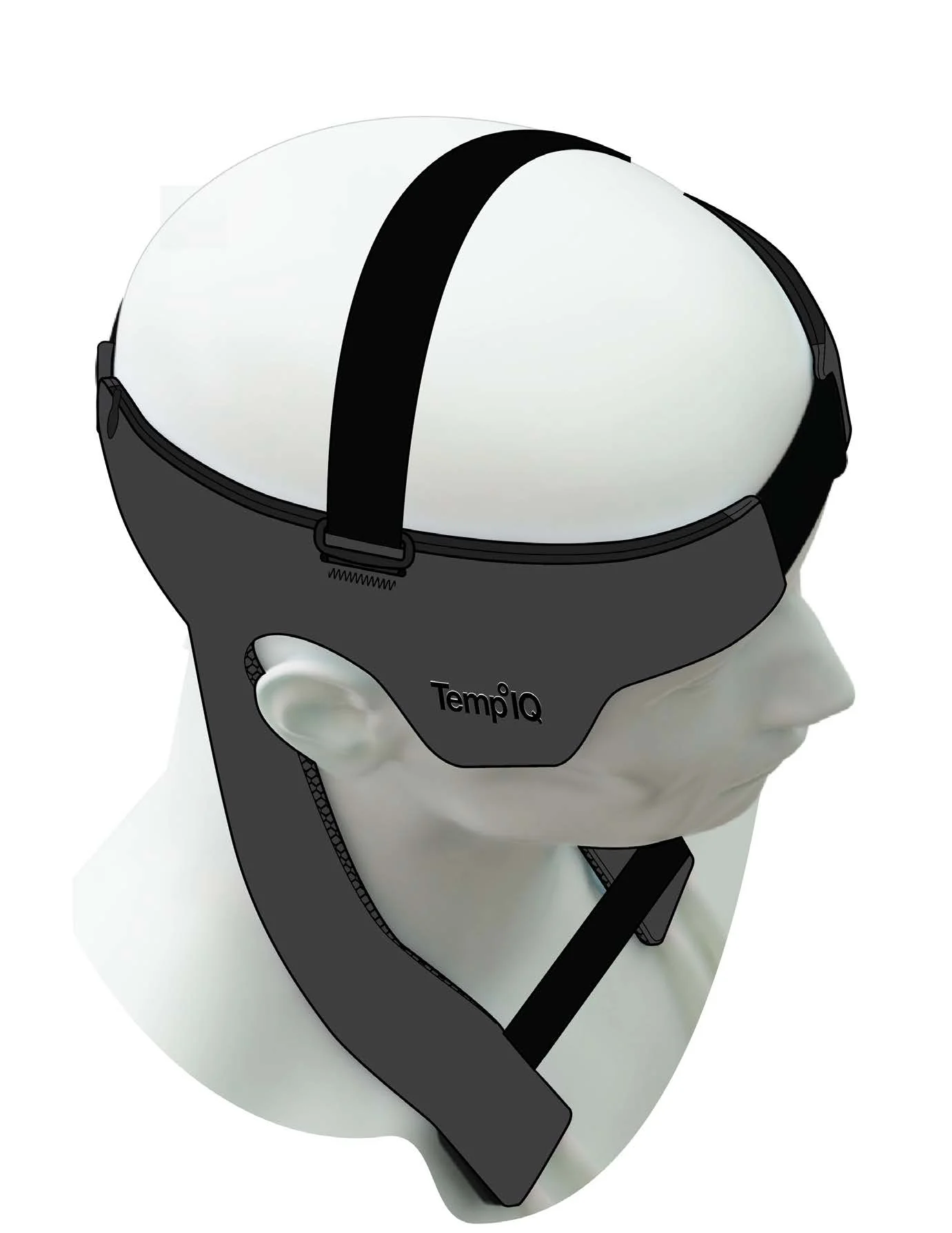
The HALO CTP — Temp°IQ’s cranial thermal pack
Audience: sports-medicine clinicians, athletic trainers, researchers/labs, sleep specialists, and partner institutions — plus athletes/families and leaders.
Job: Learn (educational hub) → Engage (study enrollment / collaboration) → Advance.
Primary action: route partners into the concussion study; route sleep interest to the sleep application.

Pillar 1 · Concussion Management

An educational hub, and a study.

Learn

The educational hub

A place to read and learn: what a concussion is, how it’s assessed, what ImPACT and Sway are, and how blood-based biomarkers fit in.

Open the educational hub →

Engage

The Concussion Cooling Study

Short-term arm — symptom trajectory, acute biomarkers (GFAP / UCH-L1), instrumented thermal data.

Long-term arm — cumulative head-impact exposure, NfL, serial cognition.

Device-agnostic and clinician-governed.

Explore the materials

The full Concussion Cooling Study Prospectus (complete) is hosted as a linked download.

Pillar 2 · Sleep Management

The same architecture, applied nightly.

The same peri-cranial vascular cooling — engineered for sleep. The case is direct, and it rests on established physiology:

  • Sleep onset depends on a coordinated fall in core and brain temperature.
  • Insomnia is increasingly understood as frontal cortical hyperarousal.
  • Published research indicates that surface cooling over the temporal artery and carotid sheath can lower brain temperature through selective brain cooling, without the shivering or arousal that whole-body cooling can provoke.
  • In a randomized controlled trial, frontal cerebral cooling was reported to reduce sleep-onset latency without sedative effects. These findings come from the published literature and are not claims about this device.

One platform — studied for concussion and applied, on the same principle, to sleep.

Anchor paper

The Sleep Application

The complete white paper behind this pillar — the mechanism of selective brain cooling, the sleep-onset evidence, and how the HALO platform applies it night after night.

Coming to the library

Complete and in editorial review. The claims here are drawn from it, with its own primary citations, until the full paper is hosted.

Advance

Toward an improved cranial device.

Recovery study (short + long) and the sleep indication → an improved cranial device and protocols.

Governance. Cranial work is device-agnostic and clinician-governed; minors require guardian consent. Names appear only in an athletics context with consent, never on the clinical side.
Regulatory note. Descriptive, not diagnostic. The sleep application is consumer-wellness framing and is not a medical (insomnia) treatment claim; nothing here is a treatment claim or a statement of FDA clearance.
Take part in the study →Collaborate →
Sources

Concussion claims rest on the consensus statement and the selective-cooling literature below, gathered in this library’s referenced white papers. Sleep claims trace to a completed paper awaiting hosting, with its own primary citations.

Primary literature

  1. Patricios JS, et al. Consensus statement on concussion in sport — 6th International Conference, Amsterdam 2022. Br J Sports Med. 2023;57(11):695–711.
  2. Gard A, et al. Selective head–neck cooling after concussion shortens return-to-play in ice hockey players. Concussion. 2021;6(2):CNC90.
  3. Congeni J, et al. Preliminary safety and efficacy of head-and-neck cooling after concussion in adolescent athletes: a randomized pilot trial. Clin J Sport Med. 2022;32(4):341–347.
  4. Walter AE, et al. Neurobiological effect of selective brain cooling after concussive injury. Brain Imaging Behav. 2017;12:891–900.
  5. Wang H, et al. A novel head-and-neck cooling device for concussion injury in contact sports. Transl Neurosci. 2015;6(1):20–31.
  6. Cabanac M, Caputa M. Natural selective cooling of the human brain. J Physiol. 1979;286:255–264.

In-library white papers

  1. WP-02 — Cranial Cooling Partner Deck. Study design, arms, and the early-application principle.
  2. WP-03 — Longitudinal Framework. Mechanism, selective brain cooling, and the long-term question — with references.
  3. WP-04 — Blood-Based Biomarkers. GFAP, UCH-L1, and NfL in the measurement strategy.
  4. WP-06 — Sleep Application white paper (complete; to be hosted). The source for every claim in the Sleep Management section, with its own primary citations.